

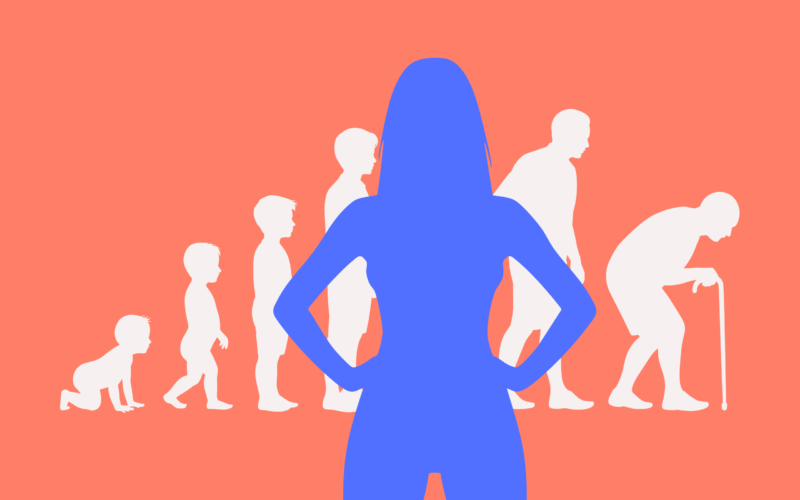
By 2030, the world is going to look very different. In just four years, one in five Americans will be over the age of 65—that’s 74 million people [1] entering a phase of life that our current healthcare system is simply not prepared for.
I look at these numbers and I don’t just see a demographic shift; I see a personal call to action. I’m grateful to have parents who are avid walkers and have modeled the importance of daily movement for me. But as I’ve entered my own “middle years”—I’m 44, a mom of two (aged 8 and 10)—I’ve realized that “staying active” is only the baseline.
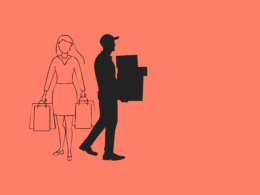
In just four years, one in five Americans will be over the age of 65—that’s 74 million people [1] entering a phase of life that our current healthcare system is simply not prepared for.
SOURCE: CENSUS.GOV
If I want to be the woman who is energetic, capable, and cognitively sharp in the year 2060, I can’t just follow a generic plan. I have to take the reins.
The Bounce-Back Trap
Five years ago, I hit my own personal wall. In November 2021, I underwent a hefty abdominal wall surgery due to a child-birthing injury. I spent the end of that year immobile, healing, and reflecting on what the next chapter of my life would look like.
I turned 40 in January 2022. I had been cleared to start walking just weeks prior, and I spent that milestone birthday taking my first tentative steps toward a total rebuild.
For years, the fitness industry told women to ‘bounce back.’ But as I took those first steps at 40, I realized I wasn’t interested in going backward—I wanted to build something better. I wasn’t trying to find an old version of myself; I was focused on creating the strongest, most capable version for the years ahead. I didn’t start by sprinting; I started with a purposeful power walk; it’s the most underrated tool we have for building metabolic health, and it was the perfect foundation for the rebuild I’m still leading today.
I showed up consistently, and slowly, the “accidental” happened: my power walking evolved into jogging intervals, which eventually turned into running. By refusing to accept a slow decline at the start of my 40s, I discovered a level of capability I didn’t know I had.
From Personal Journey to Professional Mission
My transformation wasn’t just physical; it was intellectual. Once I felt the power of science-backed movement in my own recovery, I realized how underserved women in my position really are. Most mothers don’t have the luxury of spending hours at the gym; we need efficiency, safety, and expertise.
To support these new goals, I went back to the books. After my own journey was well underway, I earned my NASM Personal Training and Nutrition certifications. I then pushed further to become a Senior Fitness Specialist (SFS) and Performance Enhancement Specialist (PES). I wanted to ensure that every mile I run and every exercise I coach for @iwill.health is grounded in the highest standard of metabolic health and long-term performance.
Why @iwill.health Exists
We’ve been told for decades that we are living longer, but the data tells a more complicated story. In 2020 and 2021, American life expectancy experienced its largest two-year decline in a century [2]. While we saw a much-needed rebound in 2023 and 2024, the U.S. still lags behind comparable nations by nearly four years [3].
We are fighting to regain our lifespan, but we are still losing the battle for our Healthspan—spending the last 20% of our lives in poor health [4]. This is the gap I want to help women and seniors bridge. We are shifting the goalposts from “training for next summer” to “performing maintenance for the next four decades.”
Through this platform, I’ll be sharing the protocols I’ve mastered for:
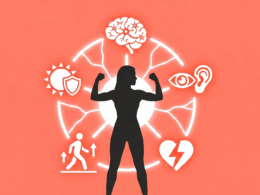
Hormonal Resilience: Building muscle as a “metabolic buffer” to stabilize insulin and support hormones during perimenopause [5].
Intrinsic Capacity: Building the sum of your physical and mental power to maintain independence [6].
The Brain-Body Connection: Using specific movement to protect cognitive health and executive function [7].
Sarcopenia & Osteopenia Prevention: Fighting the “silent loss” of muscle and bone density that accelerates after 40 [8].
Your 2030 Roadmap
You don’t have to be an athlete today. You just have to decide that you aren’t going to accept “getting older” as a synonym for “getting weaker.” Whether you are recovering from surgery, raising young kids, or simply ready to take ownership of your future, the time to build your foundation is now.
I’m training for the woman I’ll be at 80. Are you?
Sources & Data References

1. [74 million people] – U.S. Census Bureau: Older Adult Population Projections

2. [largest two-year decline] – CDC: Life Expectancy Trends 2020-2021

3. [lags behind comparable nations] – Peterson-KFF Health System Tracker: Life Expectancy Comparison

4. [last 20% of our lives in poor health] – World Health Organization: Healthy Life Expectancy (HALE) Data

5. [stabilize insulin and support hormones] – Hormones and Aging: An Endocrine Society Scientific Statement

6. [Intrinsic Capacity] – WHO Clinical Consortium on Healthy Ageing

7. [protect cognitive health] – Journal of Alzheimer's Disease: Physical Activity & Midlife Cognition

8. [accelerates after 40] – National Institute on Aging: Sarcopenia Research